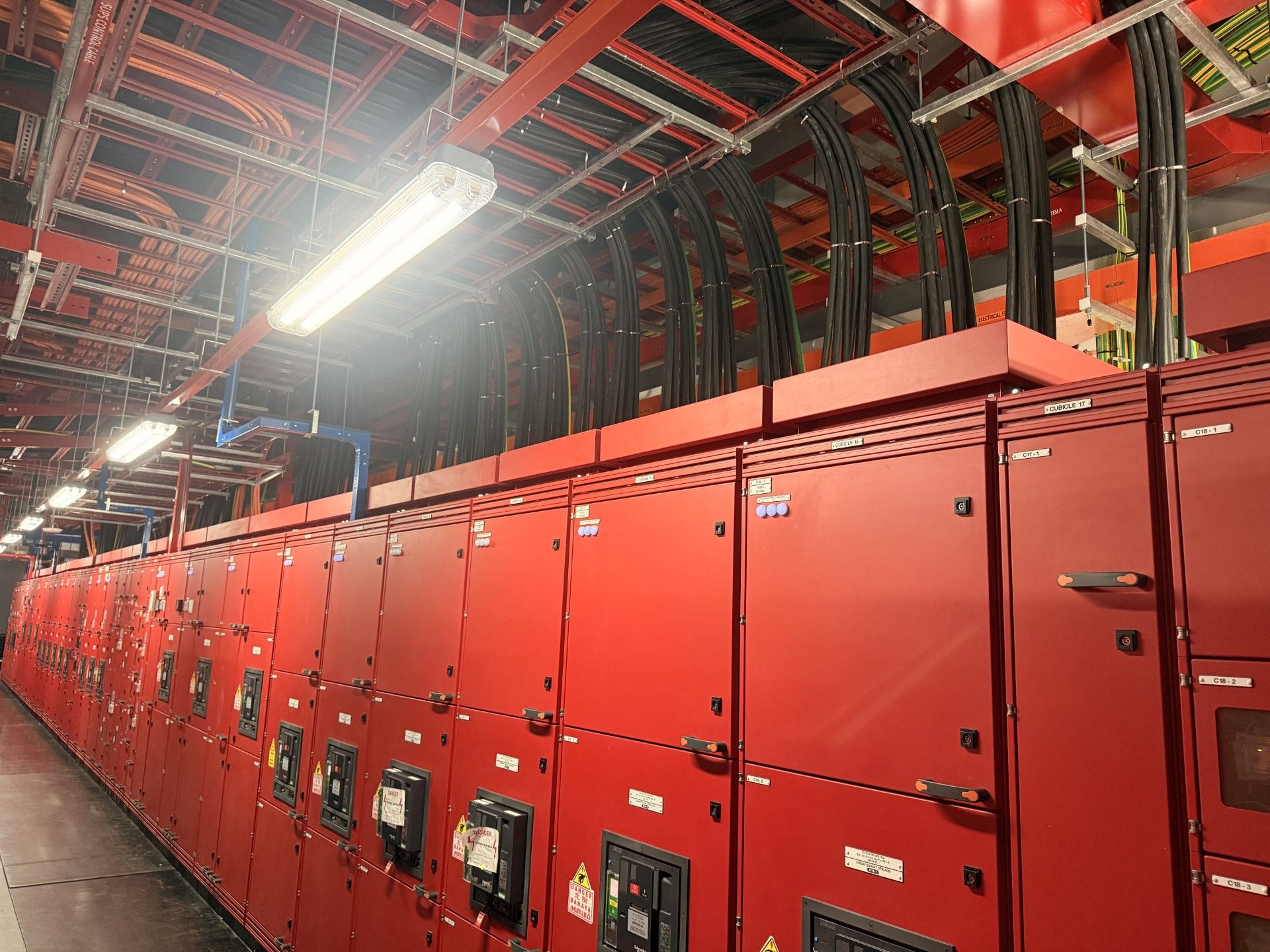
A coordinated immediate response became the foundation for broader global engineering assurance and long-term safety improvement.
Company overview
A global leader in critical digital infrastructure, with multi-billion-dollar annual turnover and operations across the United States, Europe, the Middle East, Africa and Asia-Pacific, experienced a workplace fatality on a project site. The incident triggered significant regulatory intervention, including prohibition notices.
The organisation engaged LHS Engineering and HCX Safety Group through the LHS-HCX joint venture to provide immediate support and lead a broader program of engineering assurance and safety improvement.
The challenge
The LHS-HCX joint venture provided specialist work health and safety and engineering support to lift the immediate regulatory response. The work included reviewing and strengthening critical risk controls, updating engineering systems of work and isolation procedures, and providing targeted advice on the management of testing and commissioning risks.
The joint venture continues to support the organisation in addressing regulatory requirements and applying specialist engineering assurance to improve design and construction methodologies, as well as manufacturing practices.
The review
Following the initial response, LHS-HCX was retained to undertake a broader review of the organisation's global safety and engineering systems across Europe, the Middle East, Africa and Asia-Pacific.
The review focused on identifying practical opportunities to strengthen fatality prevention measures, improve installation methodologies and refine testing and commissioning approaches. It highlighted several priority areas for improvement, with continued support being provided to help the OEM put these changes into practice.

The solution
LHS and HCX developed a risk-based safety management system and reviewed mechanical and electrical practices. The program aimed to strengthen organisational capability and drive sustained improvements across installation, commissioning and safety performance.
The program focused on:
- Gap analysis of the safety management system.
- Site-based observations of electrical and mechanical installation, including lockout-tagout, testing and commissioning processes.
- Integration of electrical and mechanical safety with testing and commissioning practices.
- Review of technical drawings and advice on design improvements.
- Arc flash calculations and personal protective equipment requirements.
Outcome
The results
The engagement enabled the client to stabilise operations following a critical incident while establishing a structured pathway to improve global safety performance and reduce the risk of future serious events.